Feel What Real Engineering Work Is Like.
Arclab exists so anyone learning to code can step inside real engineering work: a codebase you didn't write, a teammate waiting on your fix, a red CI run, a page at 2am. AI can write the code. Arclab lets you feel everything around it.
Courses Teach Code. Real Work Is Something Else.
Courses teach syntax. Real work hands you a ticket, a codebase you didn't write, a red CI run and a pager. Most people never see that side until they are in it. Arclab lets you step across and feel it.
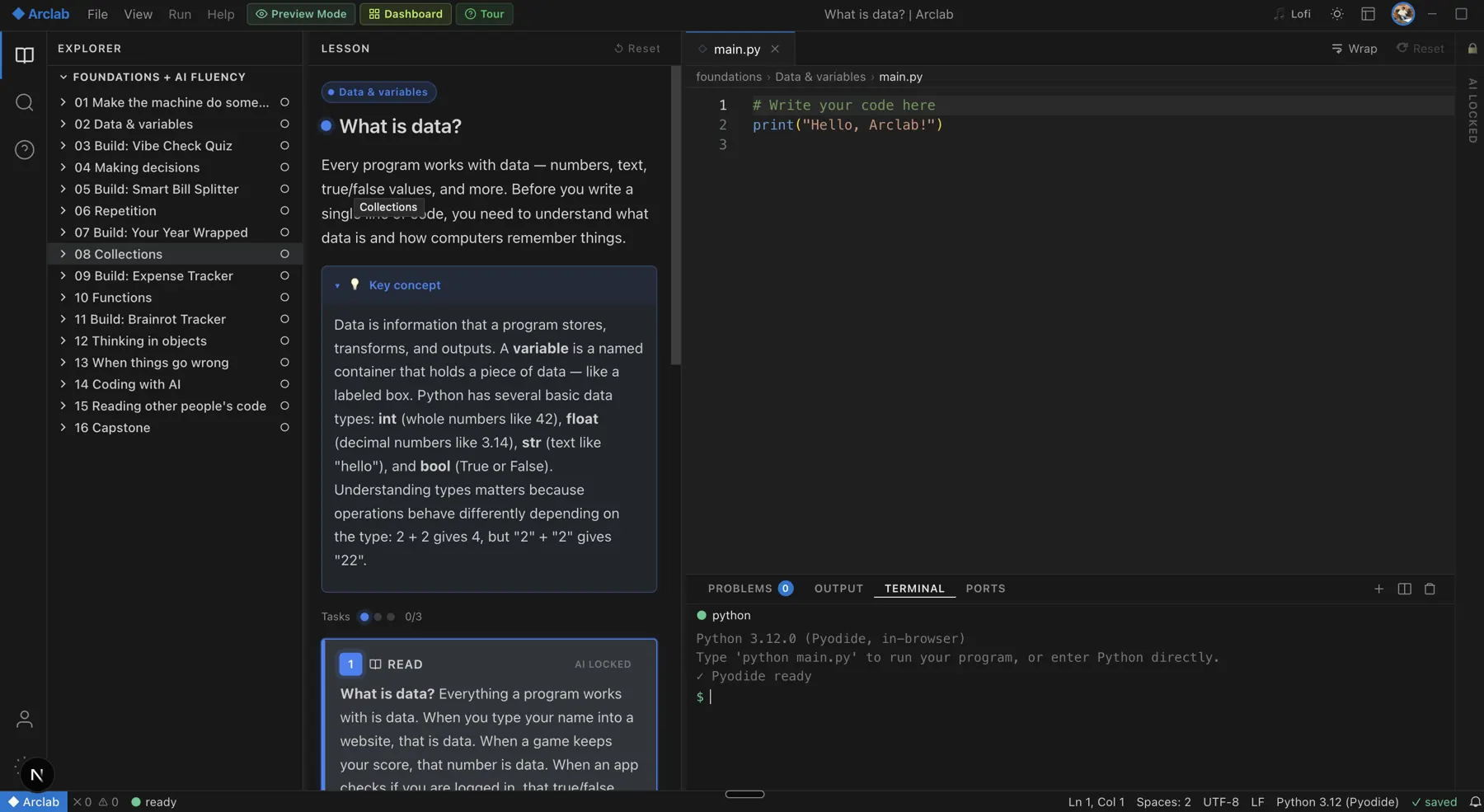
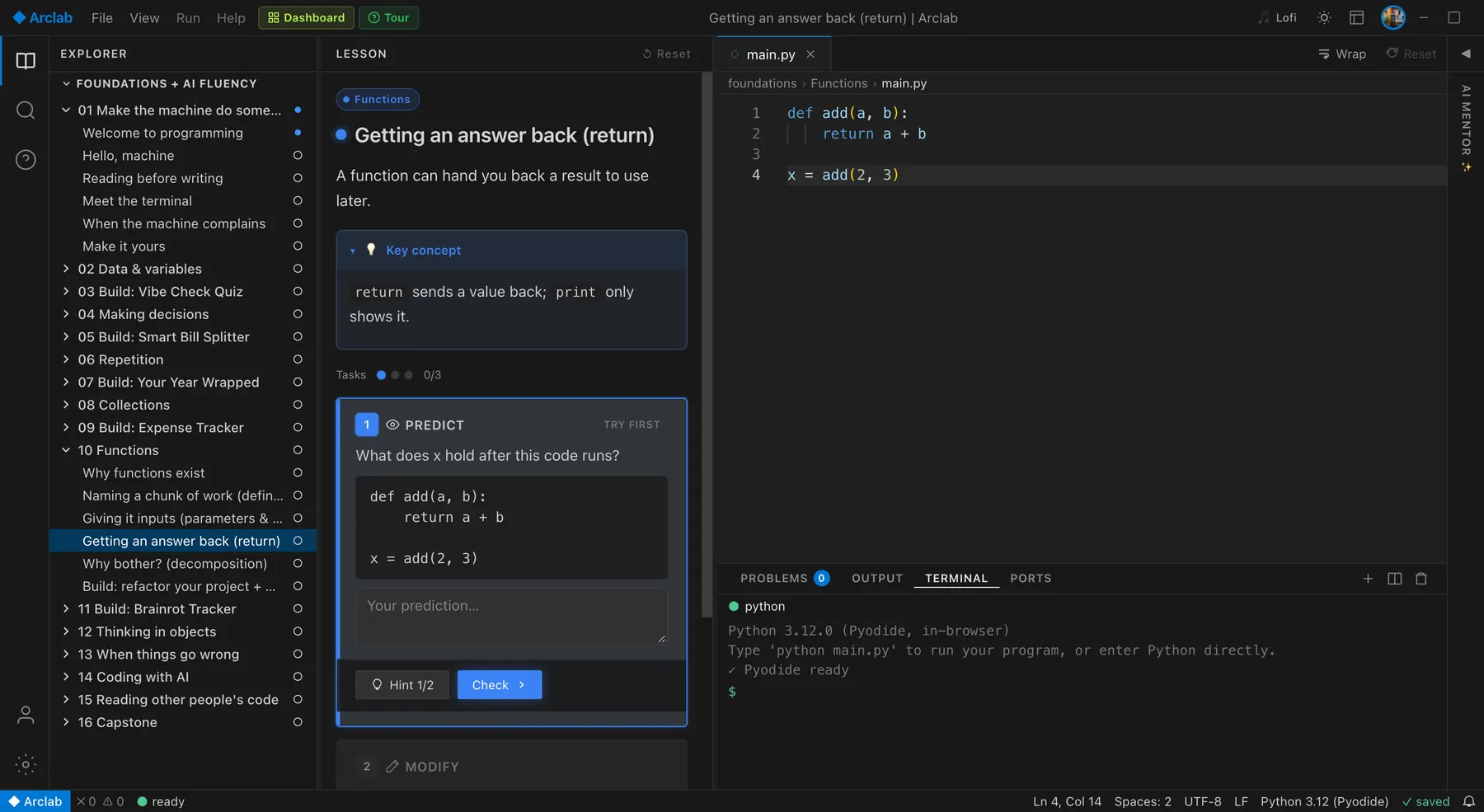
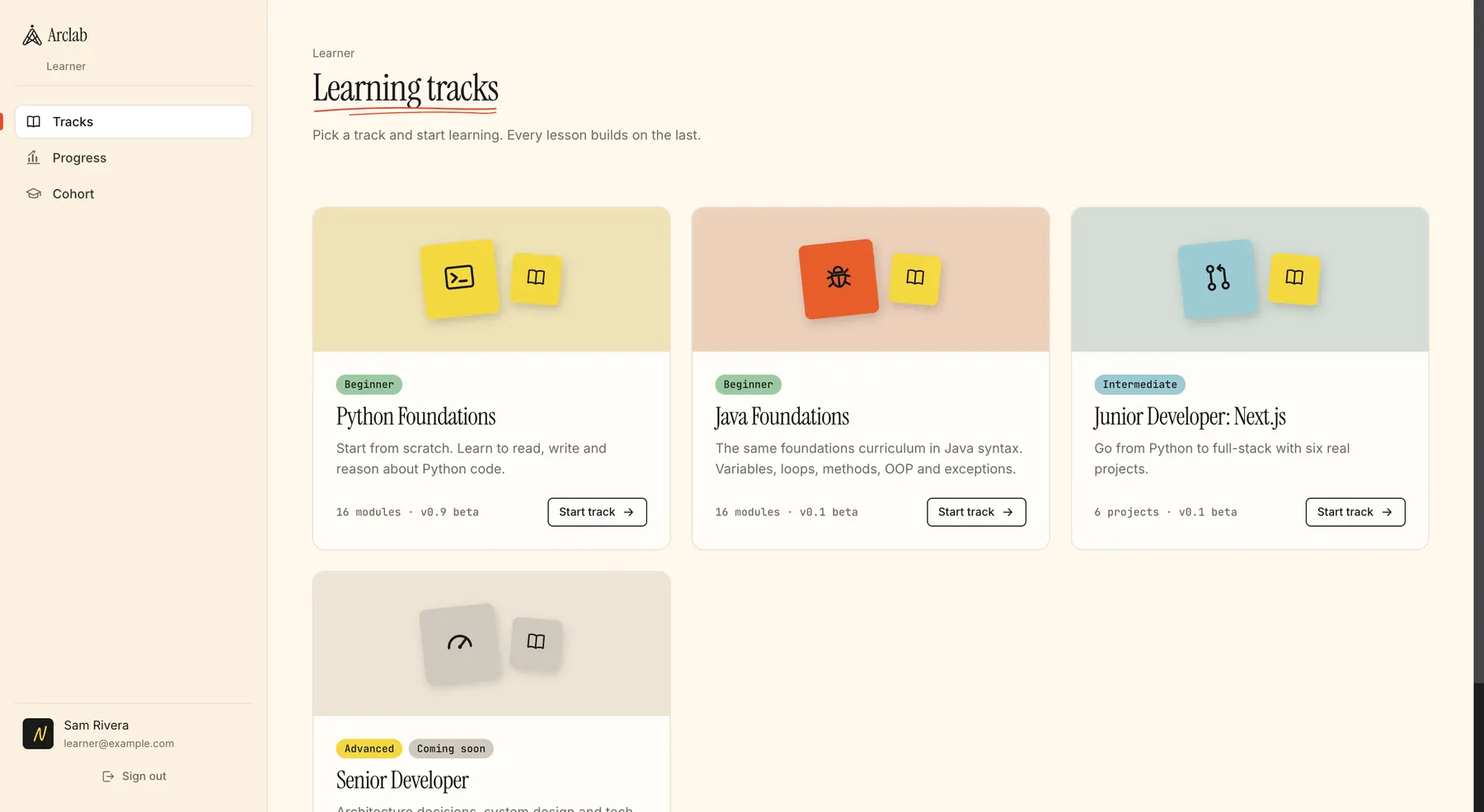
Learn Python, Java or Next.js in an editor with the lesson beside it.
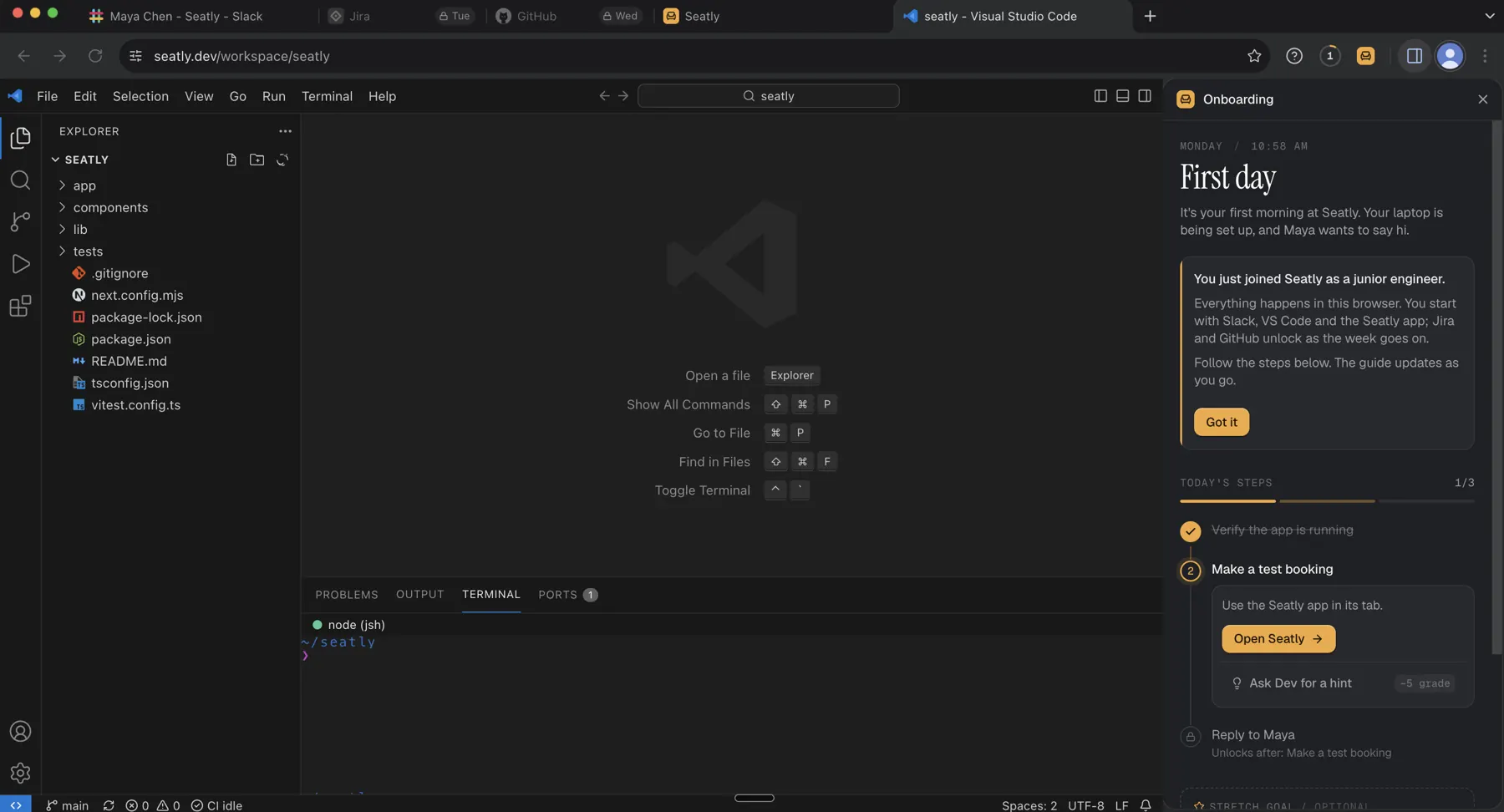
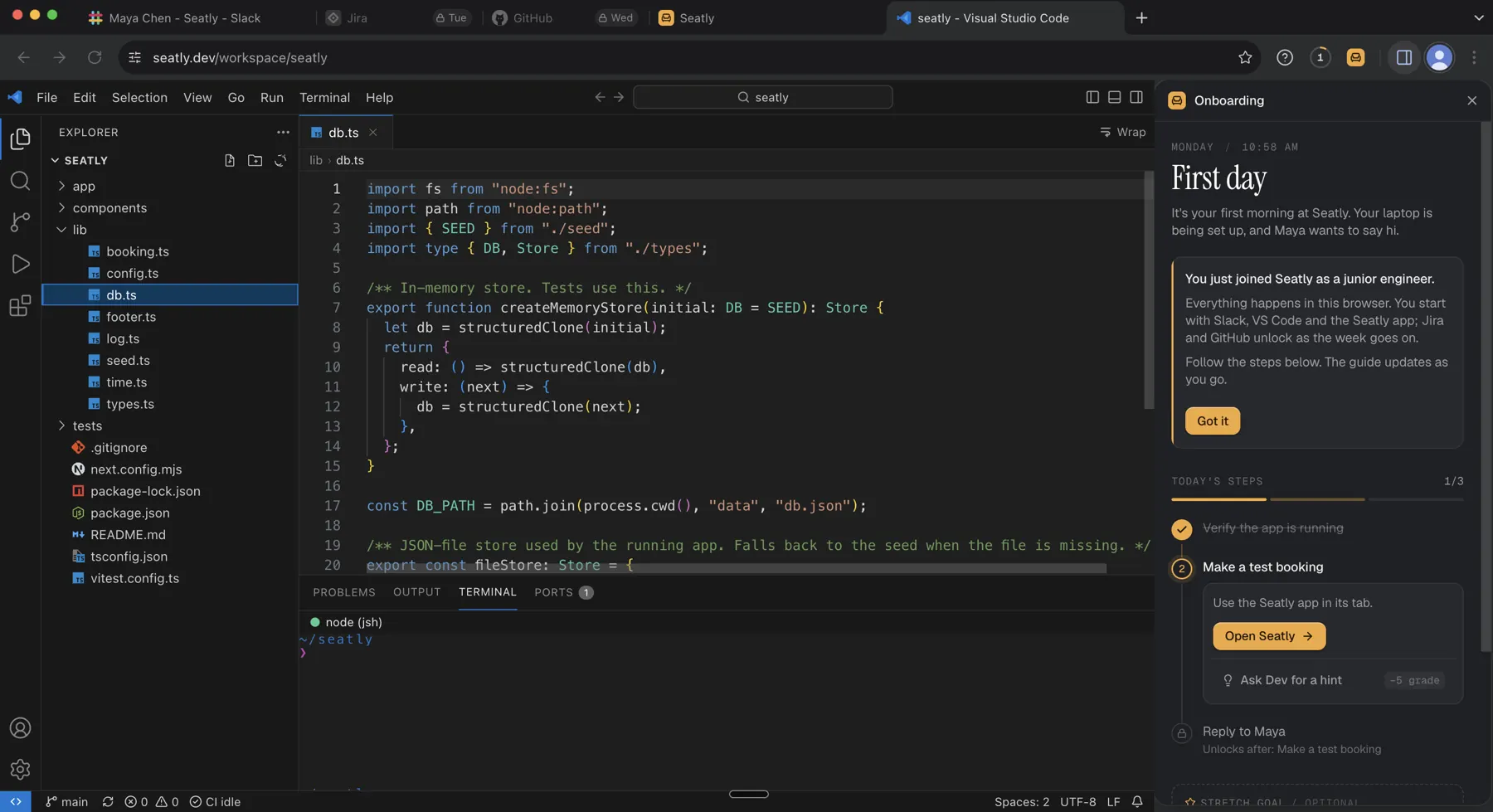
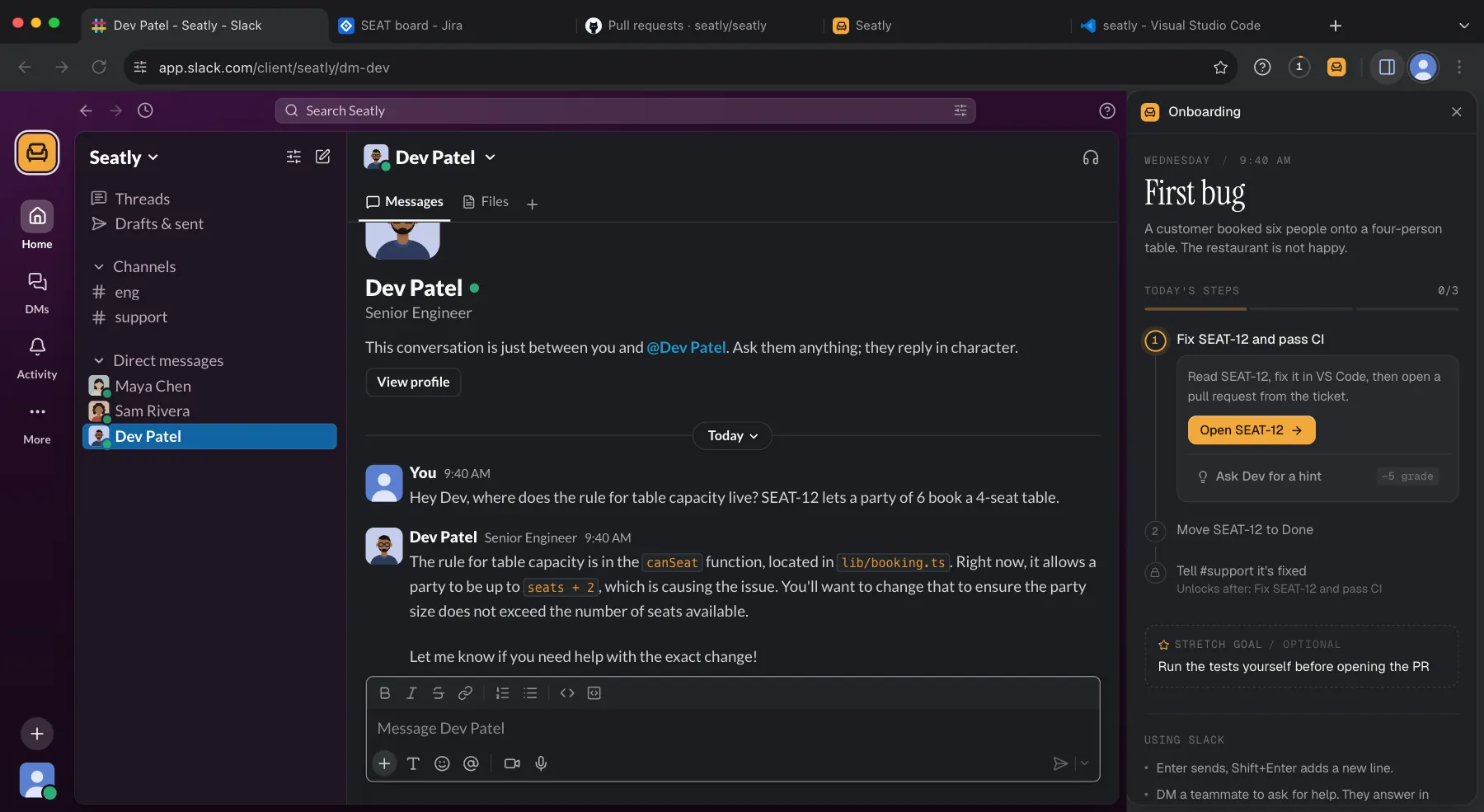
A junior engineer's first week in a real Next.js codebase.
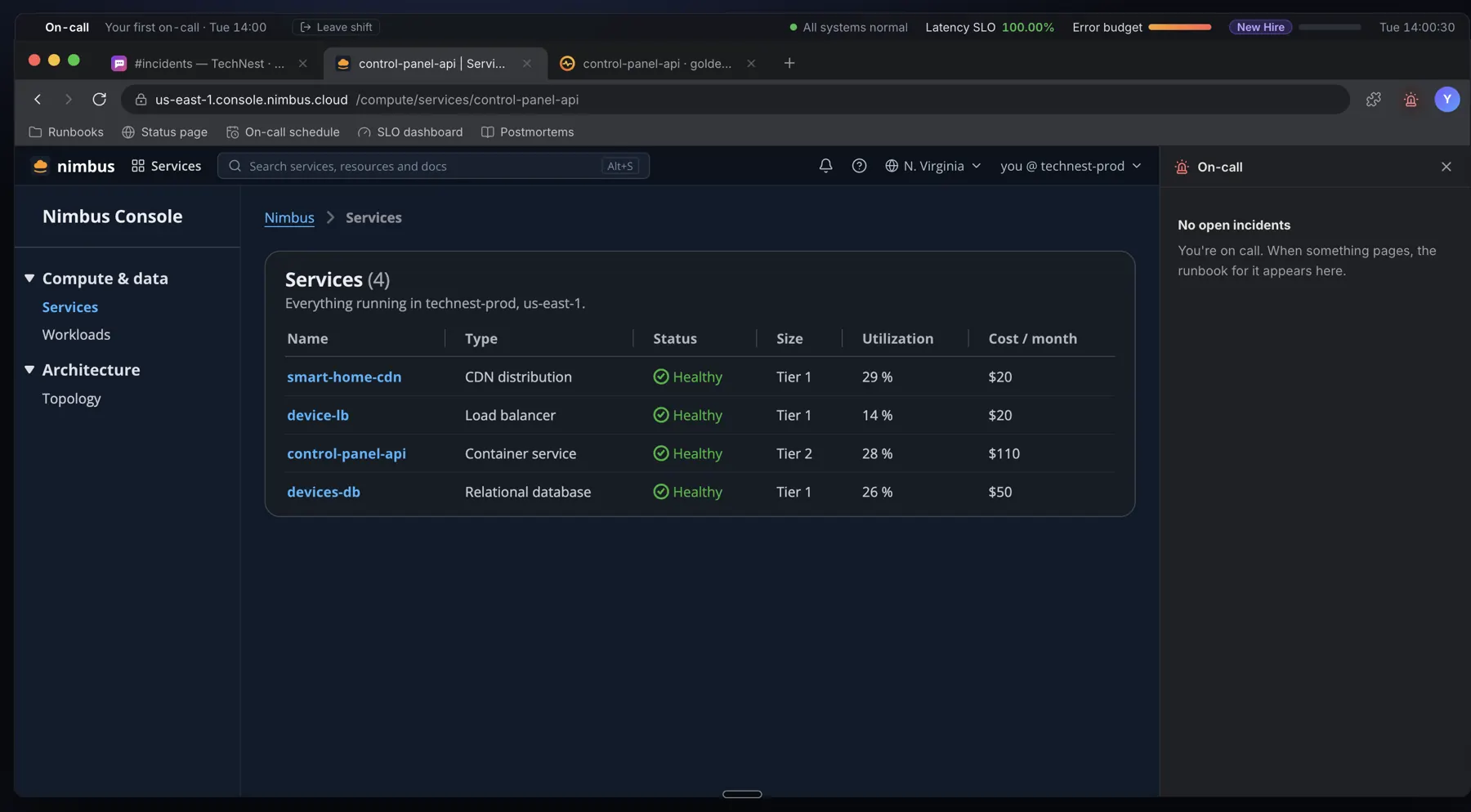
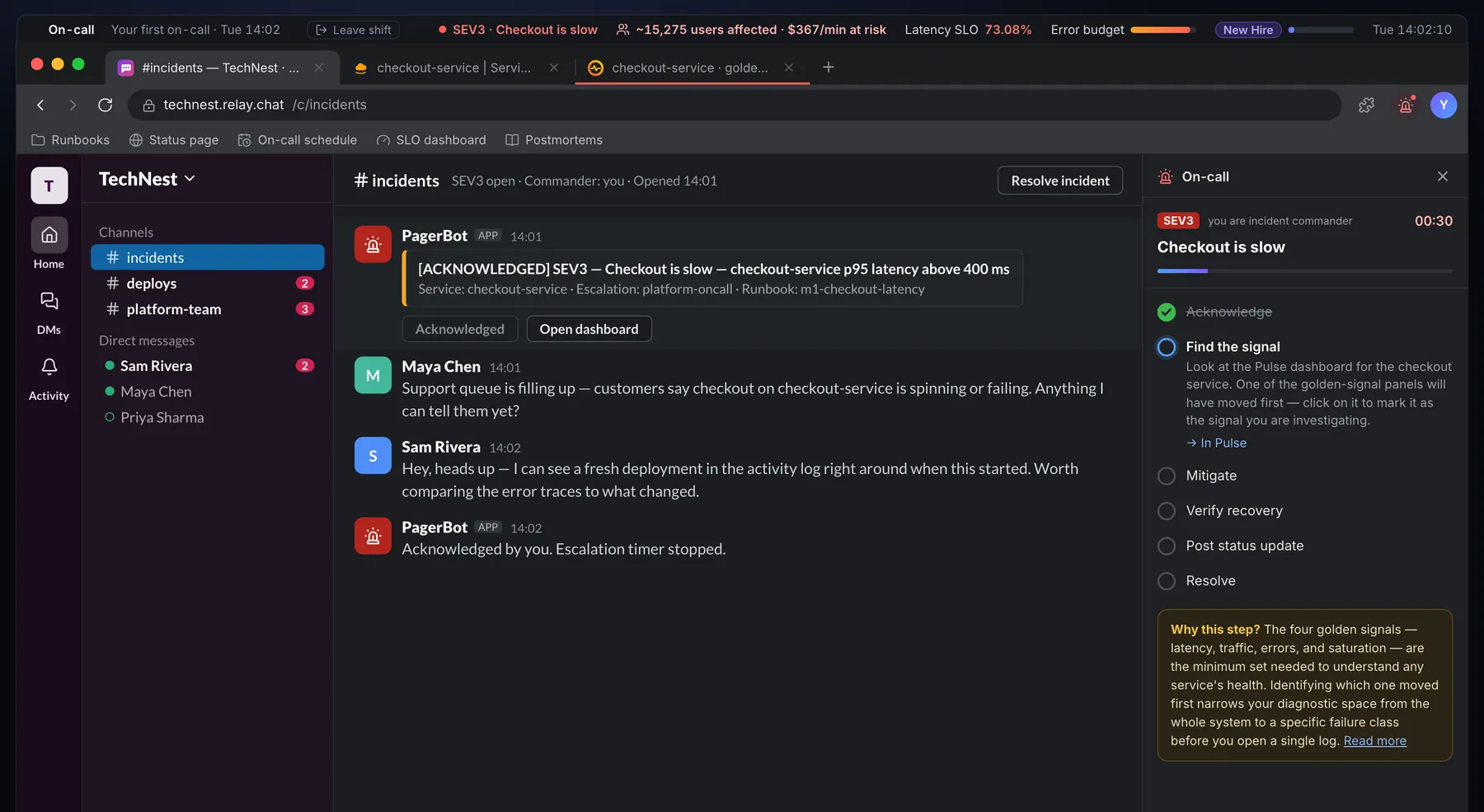
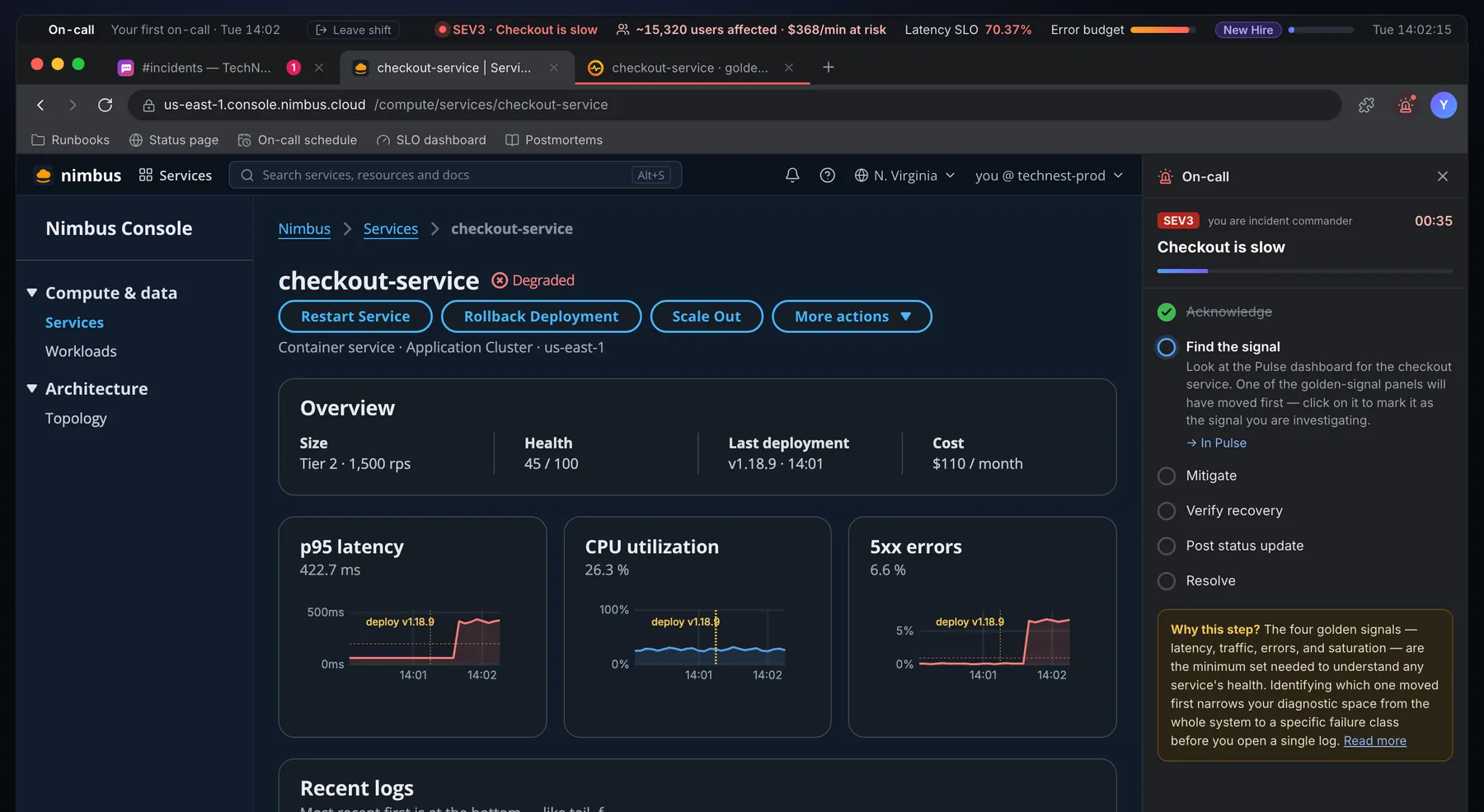
A cloud console, a pager, and a shift to survive.
From Hello World To On-Call.
Write your first line
Foundations puts the lesson beside a real editor and terminal. Predict what the code does, write it, and only then compare with AI.
Join a team on Monday
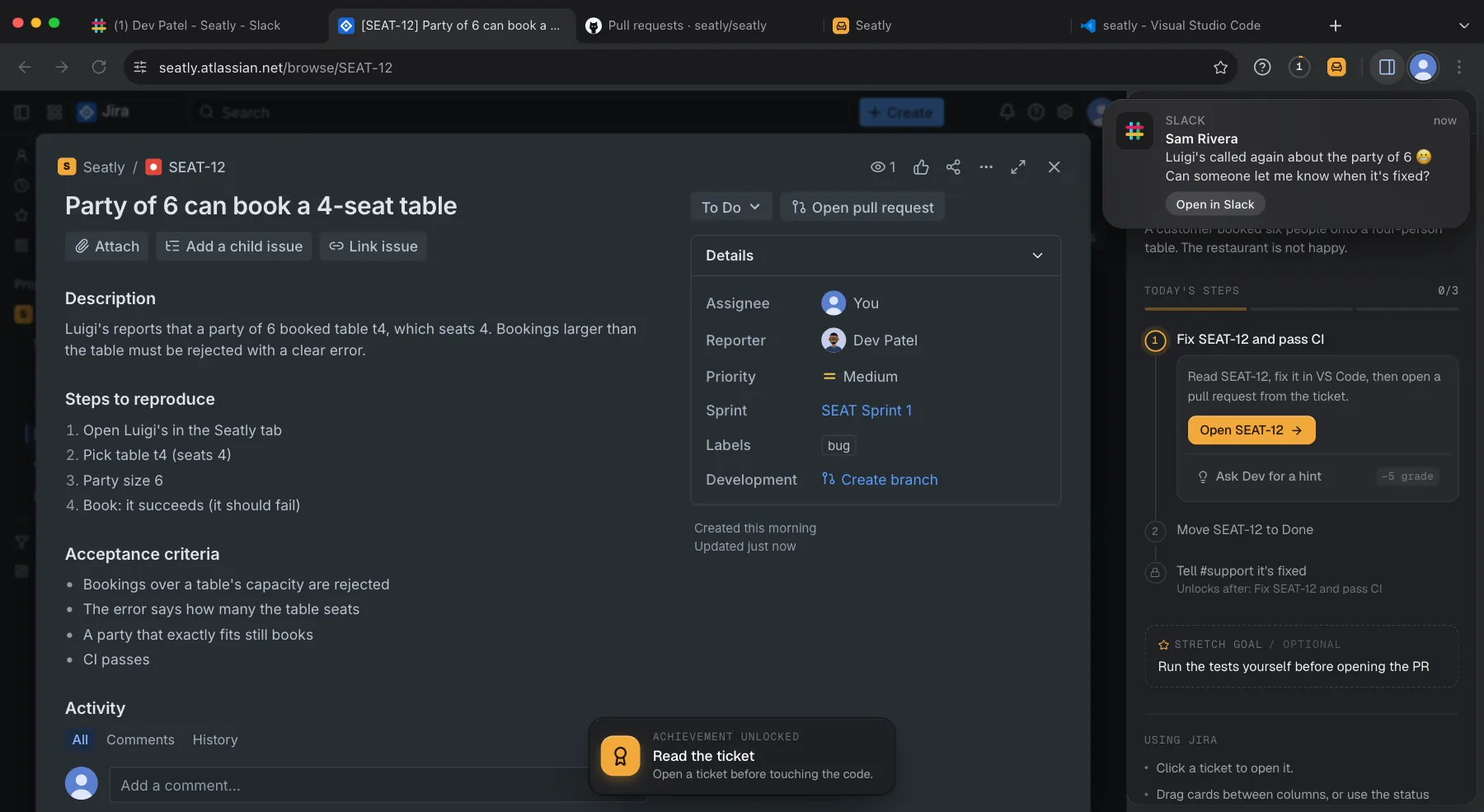
The Sim is a browser with Slack, Jira, GitHub and VS Code inside it. You're the new junior engineer at Seatly. Maya wants to say hi.
Push, fail, fix, merge
A real Next.js codebase with real tests. Tickets from teammates, CI on every push, review from Dev.
Take the pager
uptime99 is a cloud console with an on-call panel. Four services, an SLO, an error budget, and a shift that starts quiet.
AI Writes The Code. The Work Is Everything Else.
An assistant can write a function in seconds. It won't read the ticket Maya wrote, ask the right question in standup, figure out why CI is red, or decide to roll back a deploy at 2am. You only understand that part by living it, so that is what Arclab lets you do.
export function canSeat(party: number, seats: number) {
  return party <= seats;
}
- read the ticket
- ask in standup
- why is CI red?
- review a PR
- roll back at 2am
- write the test
Real Moments From Inside Arclab.
Lesson 02, Data & variables. "2 + 2 gives 4, but '2' + '2' gives '22'." Predict it before you run it.
Monday 10:58. "Your laptop is being set up, and Maya wants to say hi." Verify the app, make a test booking, reply to Maya.
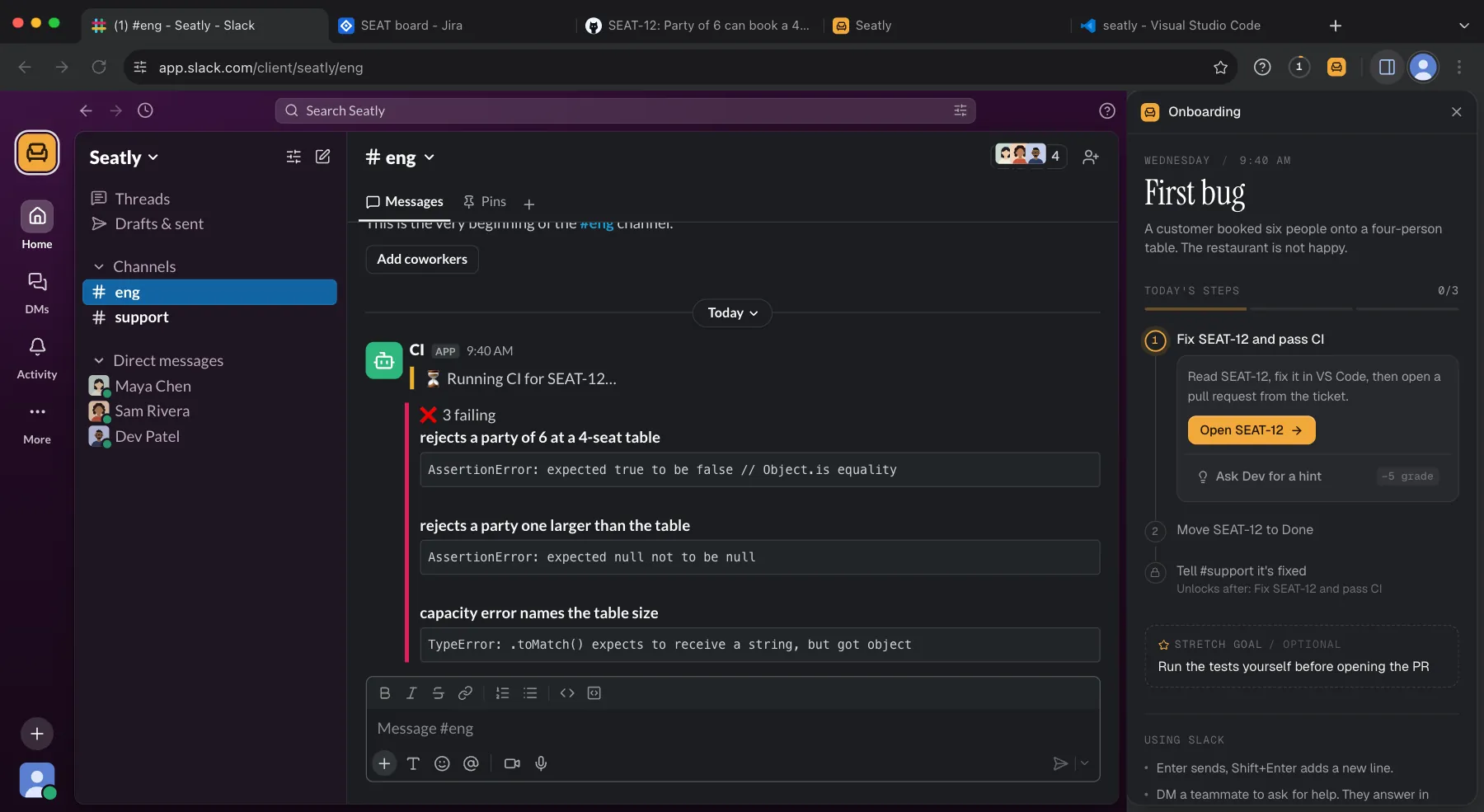
capacity.test.ts › rejects a party of 6 at a 4-seat table. Expected false, received true. canSeat() lets in two more guests than the table seats.
PAGE. p95 latency 1,240 ms on control-panel-api. Deploy v2.31.0 rolled out 2 minutes ago. DB connections 98/100. Your call.
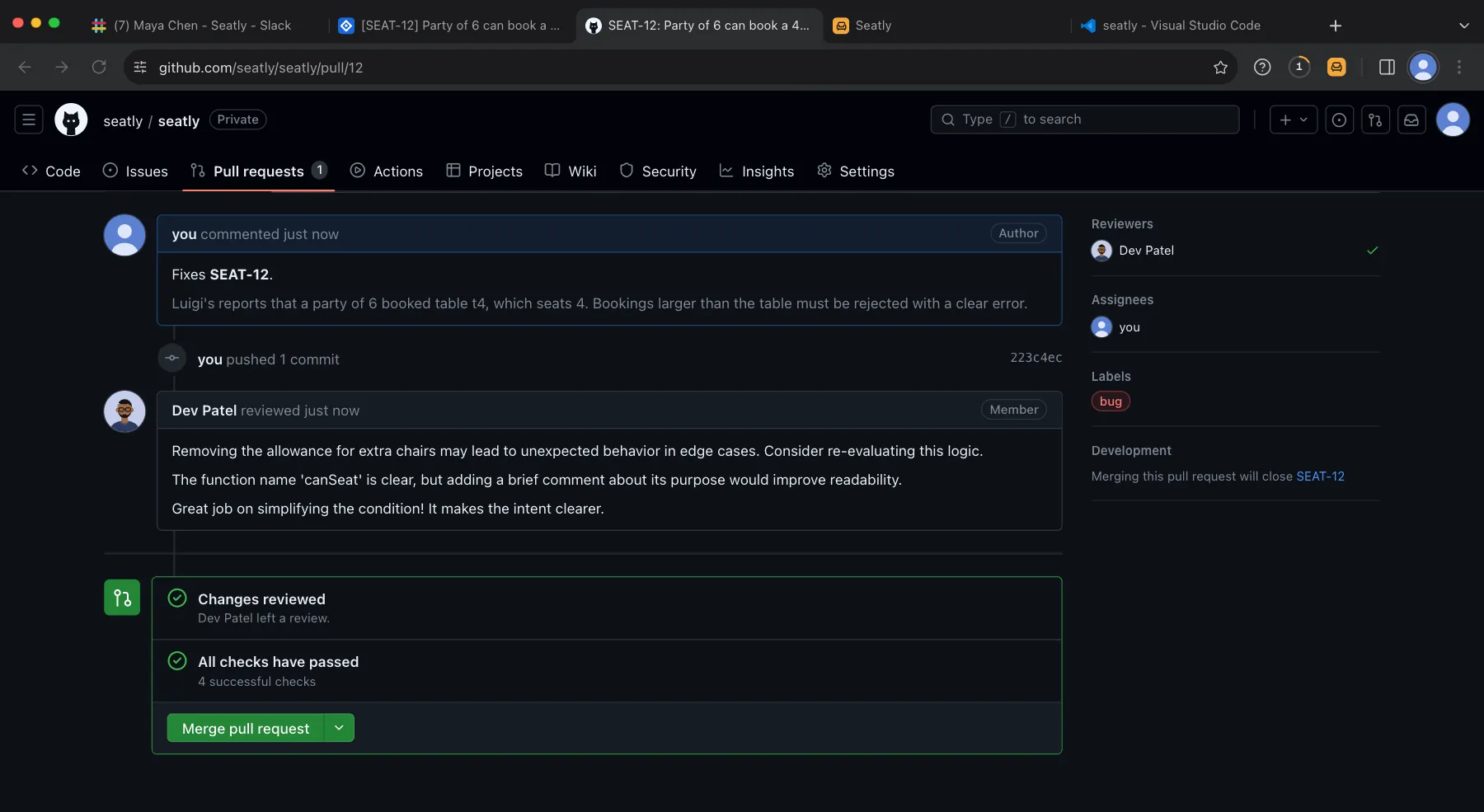
Dev approved. "Nice fix. Can you add a test for a party that exactly fits?" Merged into main.
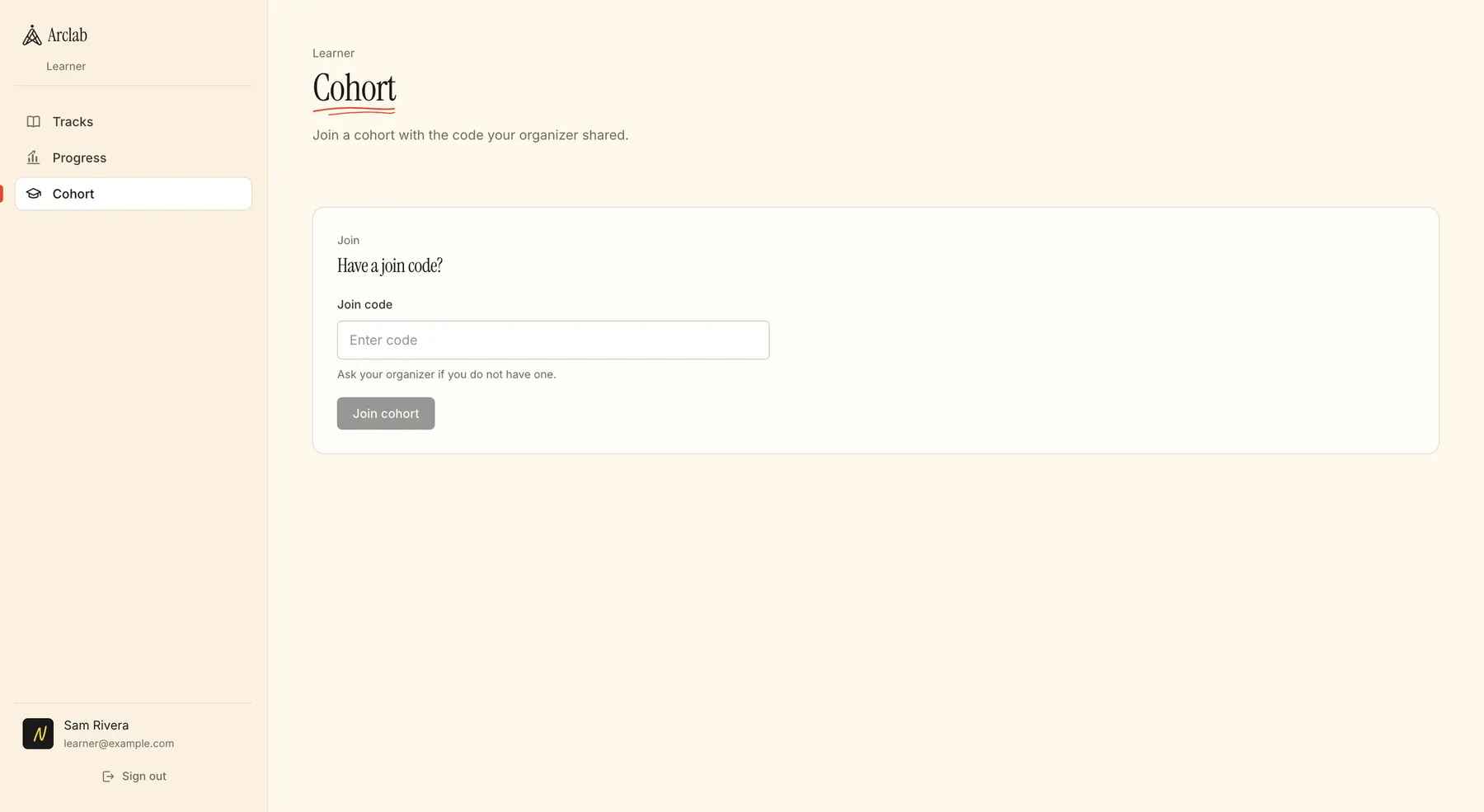
Cohort spring-26. 24 learners joined with code SPR26. Lessons and tasks completed for each of them, before Thursday's session.
A Minute Of Each, Right Here.
Predict the output before you run it.
nums = [3, 1, 2]
print(sorted(nums)[-1])
We Teach The Way The Research Says.
Fundamentals first, AI later.
Start conventionally, then bring AI in through deliberate steps; learners without the basics are confused by AI answers.
So the first seven Python modules are AI free, and the mentor unlocks in stages after that.
02Make the task one AI can't just finish.
ChatGPT-4 solved 100% of the simplest intro Python labs and 35% of the hardest.
So you trace, predict and explain code, not just submit an answer.
03Help after you try, not instead of trying.
With hint-first mentoring, 90% finished their projects versus 60% without (200 participants).
So task help opens only after you have made an attempt.
None of these studies tested Arclab. The notes list what each one found, what we built because of it, and what it does not prove.
Arclab is a mission, not a course. Anyone who wants to build software should get to feel what real engineering work is like: the code, the team and the pager. In a browser, at their own pace, as many times as it takes. Nobody should have to learn this alone.
Why Arclab Exists.
 for everyone
I kept meeting people who had finished courses, passed every quiz, and still froze the first time they opened a real repository or got paged at night. It was never the syntax. Nobody lets you practice the job before you have the job, and the people who need that practice most are the ones who can least afford to pay for it.
So I'm building the parts I wish had existed: a lesson that makes you predict and write before an AI shows you anything, a first week on a team you can replay until Monday feels familiar, and an on-call shift where the worst that can happen is a bad grade.
Arclab is free for individuals and will stay that way. Bootcamps and engineering teams pay for cohorts and dashboards; that pays for everyone else. If you're learning alone right now, this is for you.
What I Promise Every Learner.
- Mistakes are safe here. Break the build or miss the page, then try again.
- You think first. AI shows its version only after you write yours.
- Nothing to install. A modern browser is enough.
- Real work, not quizzes: real codebases, real tests, real pages.
- I only claim what's built. If it isn't ready, the page says so.
For Anyone Learning On Their Own.
- starting from zero
- self-taught and stuck
- bootcamp grad
- career switcher
- never opened a real repo
- scared of git
- first job next month
- junior on a new team
- never been on call
- learning between shifts
- curious about DevOps
- tired of tutorials
Questions.
What is Arclab?
Three browser-based products for learning software engineering by doing: Foundations (learn Python, Java or Next.js), the Software Engineer Simulator (a junior engineer's first week in a real codebase) and uptime99 (a DevOps and SRE game about keeping production up). Started by Nishar Miya to make realistic coding education free and open to everyone.
Is Arclab free?
Yes. Foundations is free during beta, and the Sim and uptime99 are free to play. Paid plans only exist for organizations that want cohorts, dashboards and support.
Do I need to install anything?
No. The editor, terminal, CI and dashboards all run in a modern browser. A laptop or desktop works best, and the Sim needs Chrome or Edge.
Where should I start?
New to programming: Foundations, Python track. Already code: the Sim. Interested in infrastructure: uptime99.
Is there one account for every product?
One Arclab account is coming to all three. Today Foundations uses it, and the Sim and uptime99 need no account at all: your progress saves in your browser.
Does Arclab work for bootcamps and companies?
Yes. Bootcamps can run cohorts on Foundations today; engineering teams can join early access for the Sim and uptime99. See Arclab for teams.